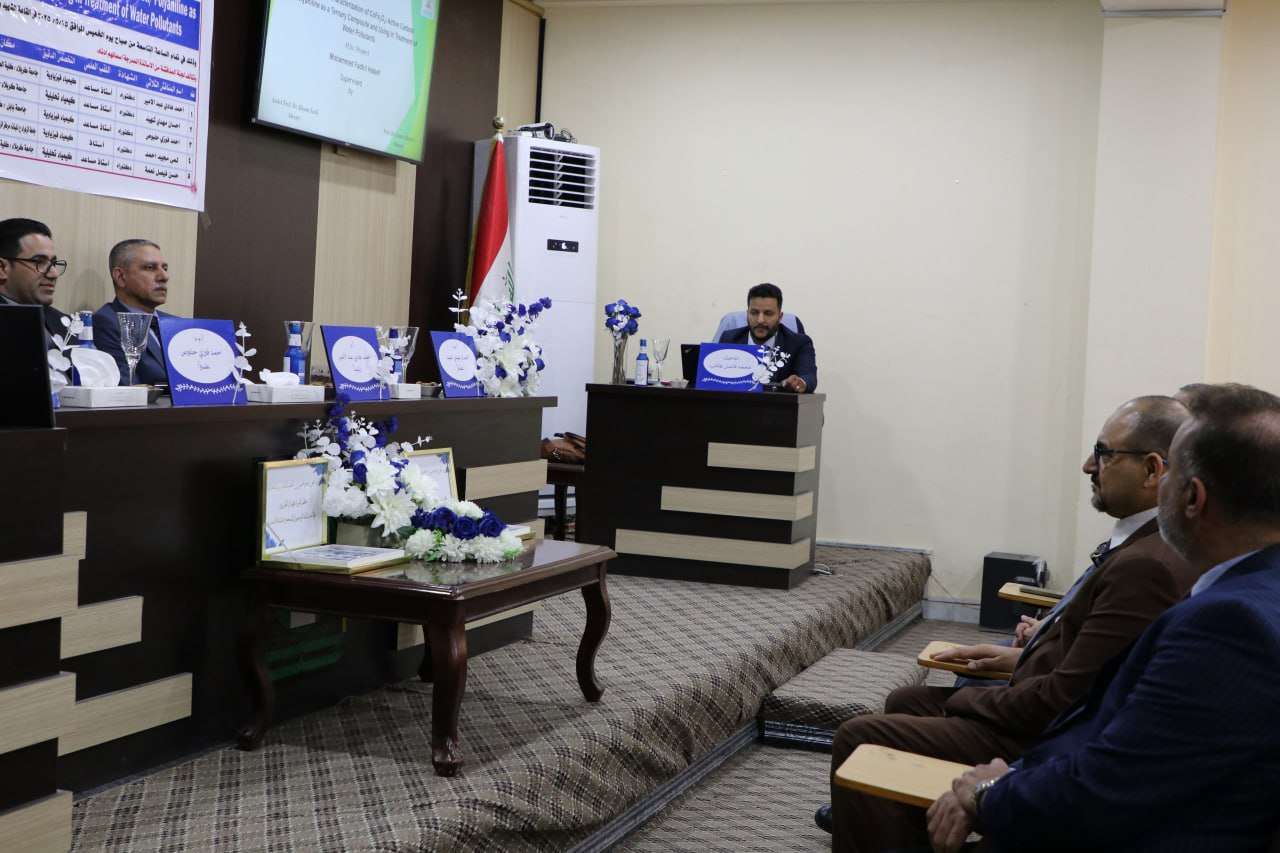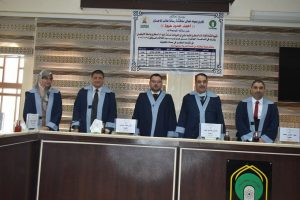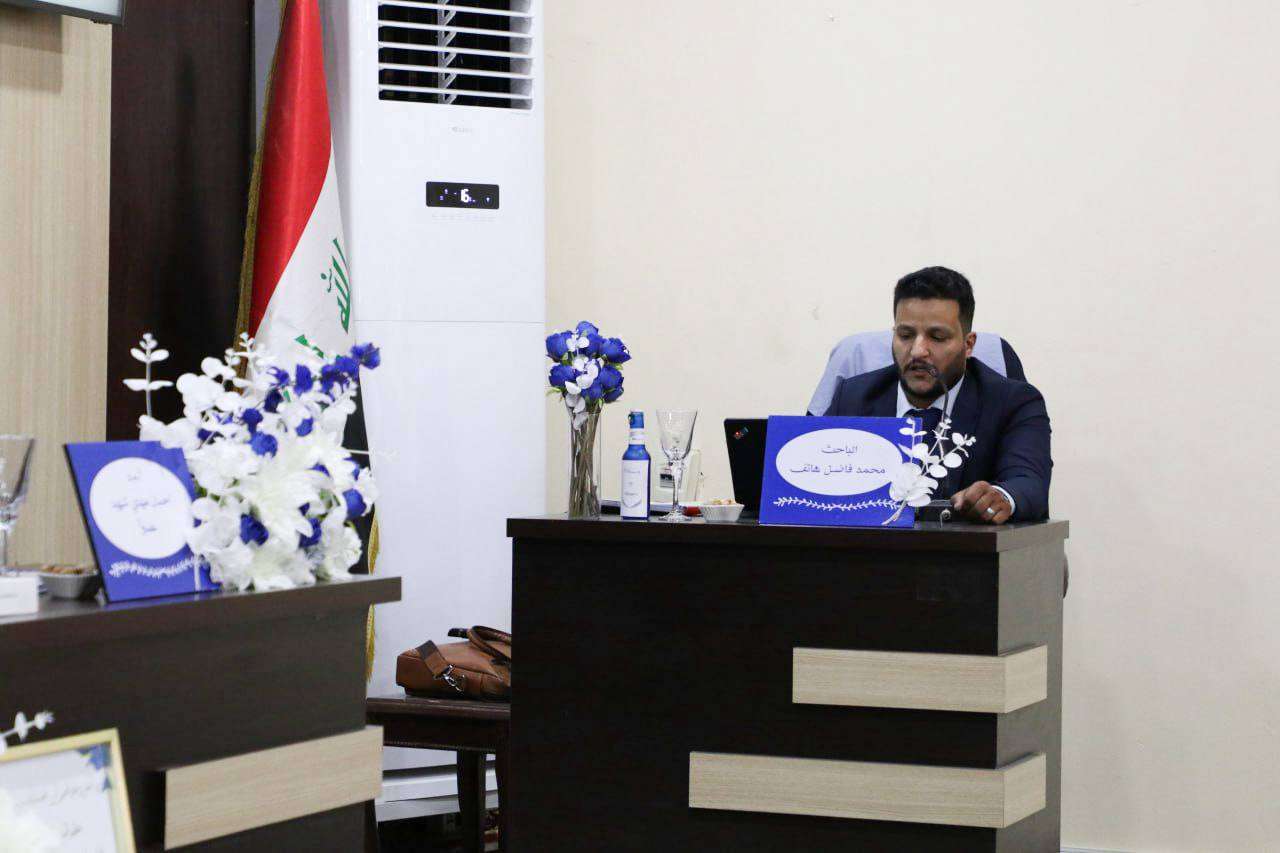
A Master’s thesis submitted by student Mohammed Fadel Hatif from the Department of Chemistry, College of Science at the University of Kerbala, focused on the synthesis and characterization of a ternary nanocomposite composed of CoFe₂O₄, activated carbon, and polyaniline. The study examined its efficiency in treating water contaminated with organic dyes.
The research aimed to develop an effective nanomaterial for removing colored organic pollutants from water by synthesizing cobalt ferrite nanoparticles and combining them with activated carbon and polyaniline. These materials were selected due to their exceptional physical and chemical properties that enhance adsorption efficiency.
The study included the characterization of the nanocomposite using FT-IR, XRD, SEM, and BET techniques, and evaluated its performance in removing Direct Orange dye from water. Results indicated a high removal efficiency of up to 95%, with the potential for reuse across multiple cycles while maintaining acceptable efficiency.
The study recommended the use of this nanocomposite in environmental applications for treating industrial wastewater and encouraged further research to assess its effectiveness against various types of dyes and other industrial pollutants.