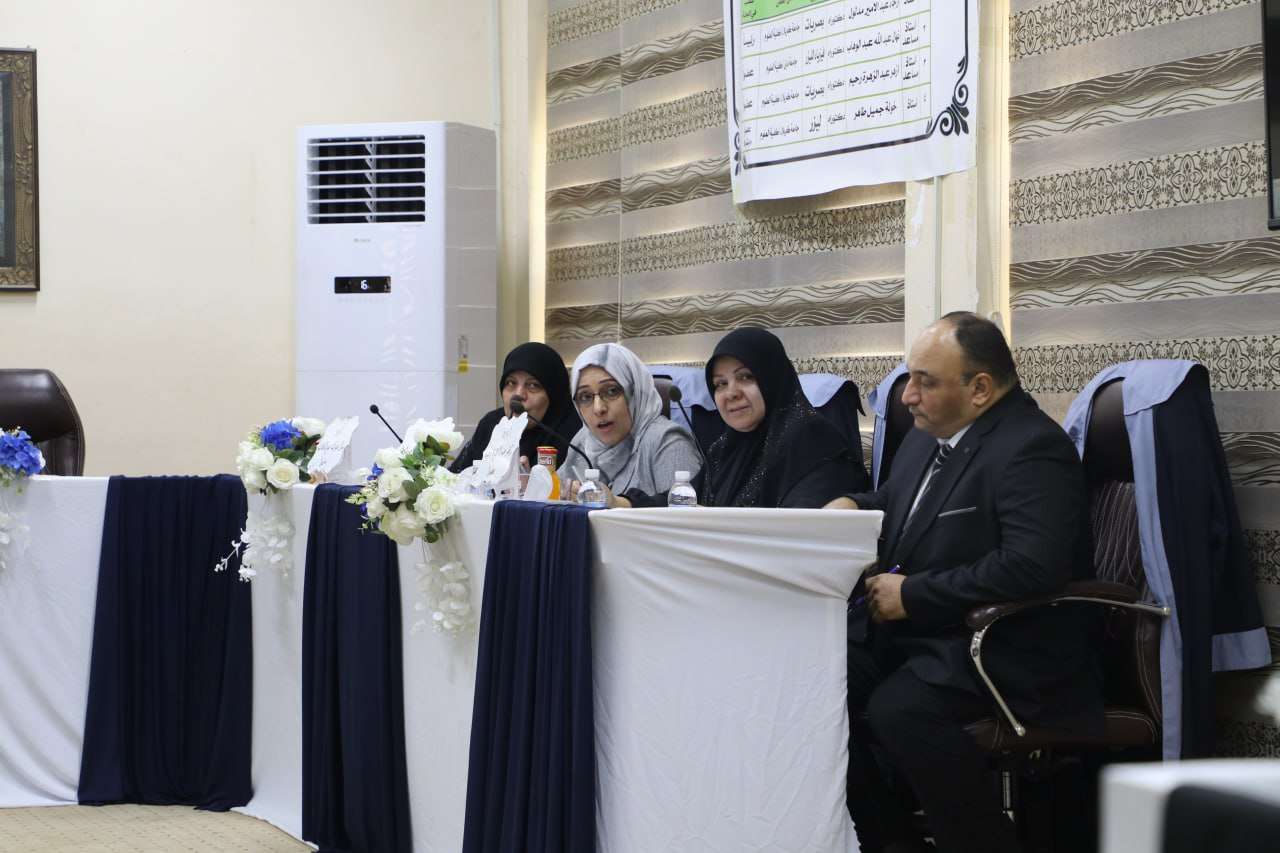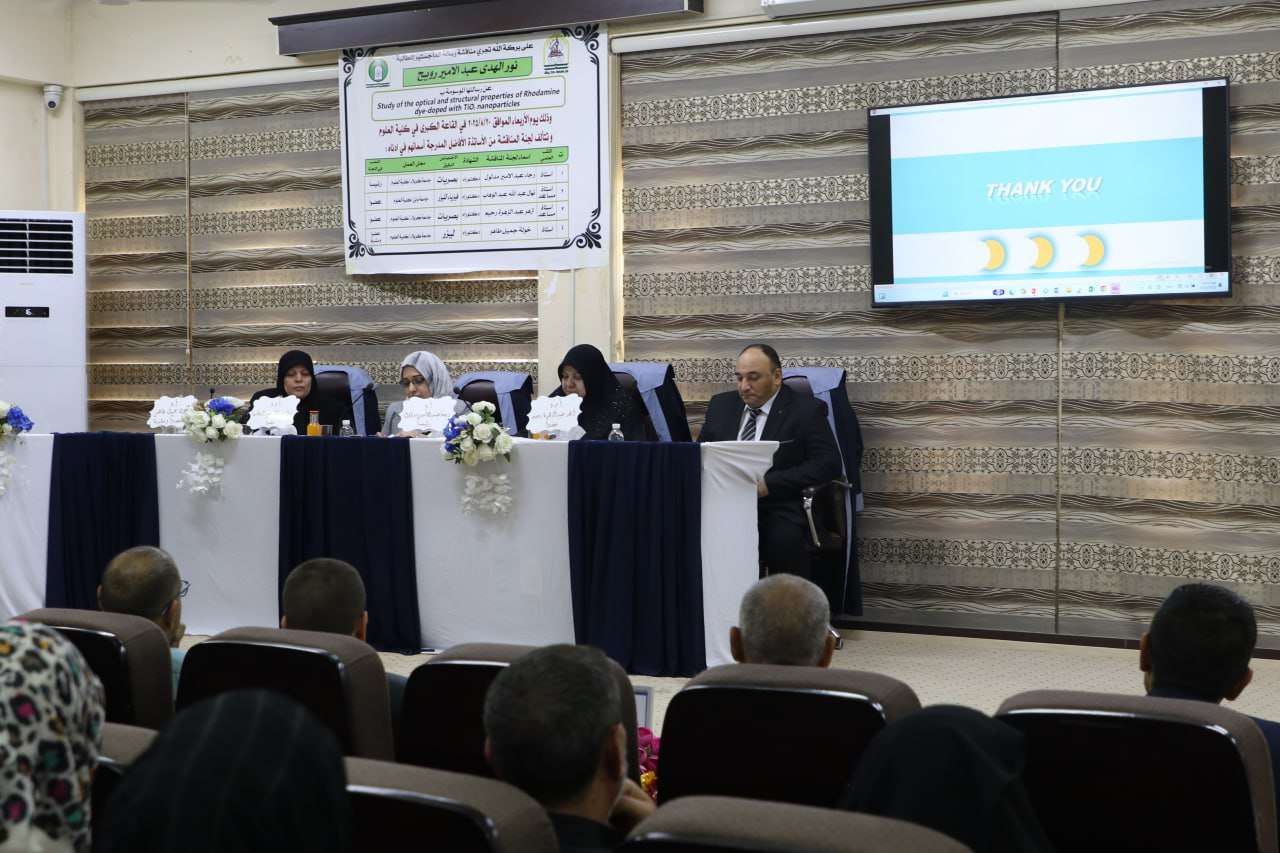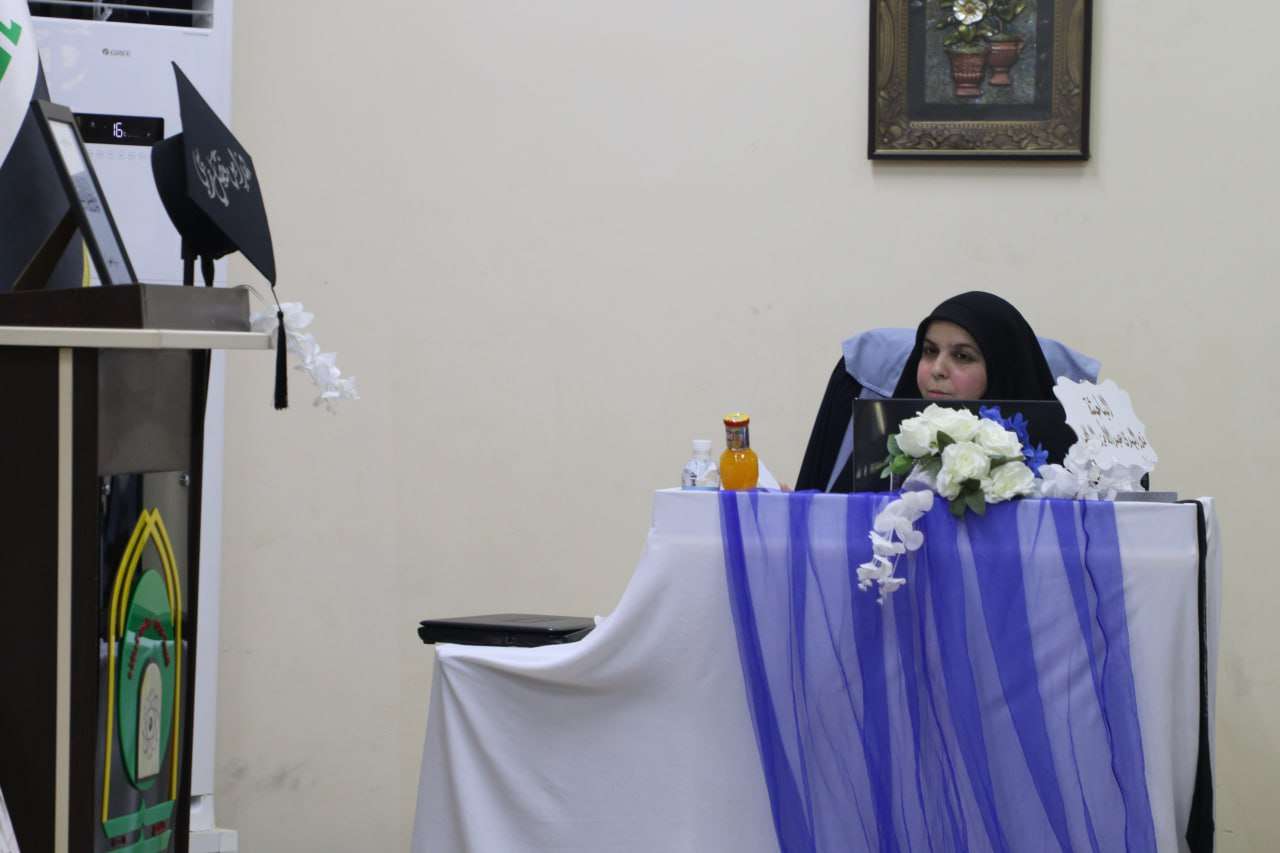
The faculty of Science at the University of Kerbala examined a Master’s thesis by student Noor Al-Huda Abdulameer Ruwaikh from the Department of Physics, which investigated the structural and optical properties of Rhodamine B dye doped with titanium dioxide (TiO₂) nanoparticles prepared using the Sol-gel technique.
The thesis aimed to fabricate an efficient laser medium based on Rhodamine dye doped with TiO₂ nanoparticles, highlighting the advantages of such media in terms of high flexibility and ease of use compared to conventional lasers, as well as their significant importance in therapeutic medical applications.
The results showed that doping Rhodamine with TiO₂ led to variations in crystallite size and crystal phase, with a notable improvement in optical properties. The optimal ratio (50% TiO₂ – 50% RhB) achieved the best performance with an energy band gap of 3.12 eV. The study also revealed that using an optimal TiO₂ concentration of 0.4 mg with Rhodamine provided the highest quantum efficiency of 86%, while higher concentrations reduced efficiency due to scattering and negative interference.
The thesis confirmed that Rhodamine dye doped with TiO₂ nanoparticles represents a promising medium for modern lasers with wide-ranging medical applications.
The recommendations emphasized expanding research on the precise effect of nanoparticle size, incorporating additional materials with TiO₂, evaluating long-term stability, exploring biomedical applications, and studying different dyes and wavelengths.