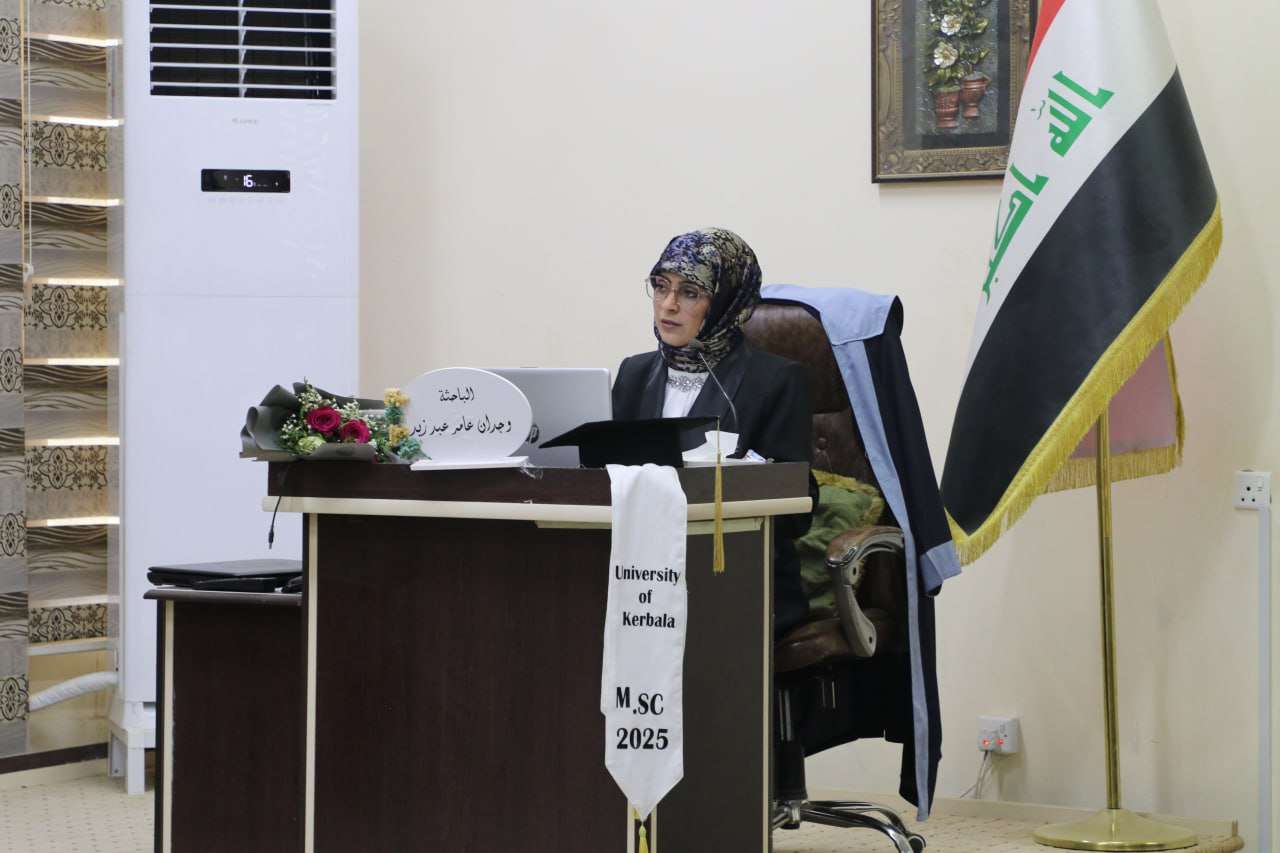
The faculty of Science at the University of Kerbala examined a Master’s thesis by student Wijdan Amer Abd Zaid from the Department of Physics, which investigated the effect of copper oxide (CuO) doping on the properties of zinc oxide (ZnO) nanoparticles and their applications in gas sensing.
The thesis aimed to prepare thin films using the Sol-gel technique and to study their structural, optical, and electrical properties, in addition to evaluating their performance as sensors for hydrogen sulfide (H₂S) and nitrogen dioxide (NO₂) gases.
The findings revealed that CuO doping contributed to reducing the energy band gap and enhancing the sensitivity of the films. The sample doped at 0.75% demonstrated the highest response to both gases at an optimal operating temperature of 150 °C, achieving a sensitivity of 241.81% for H₂S and 194% for NO₂.
The thesis concluded that these results can be effectively employed in the development of high-performance nanostructured gas sensors.