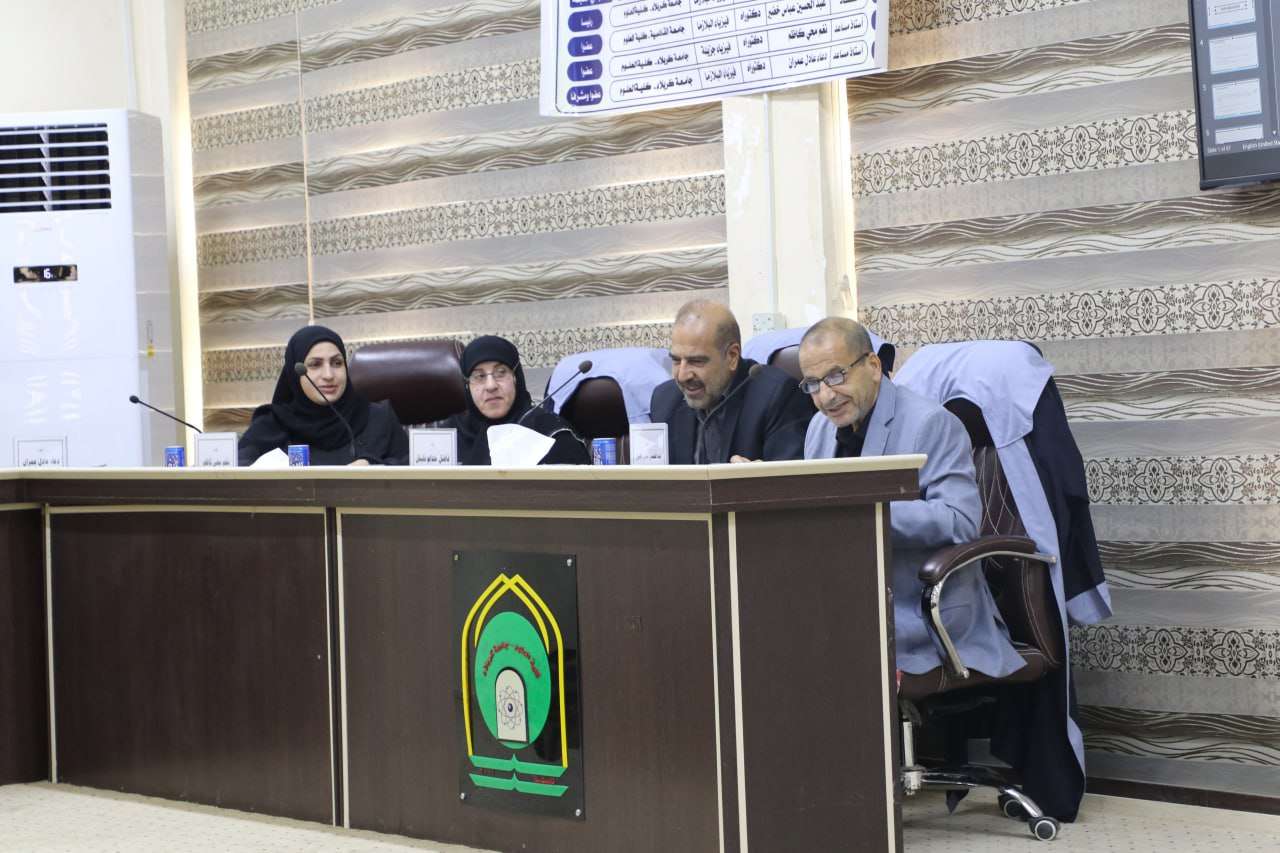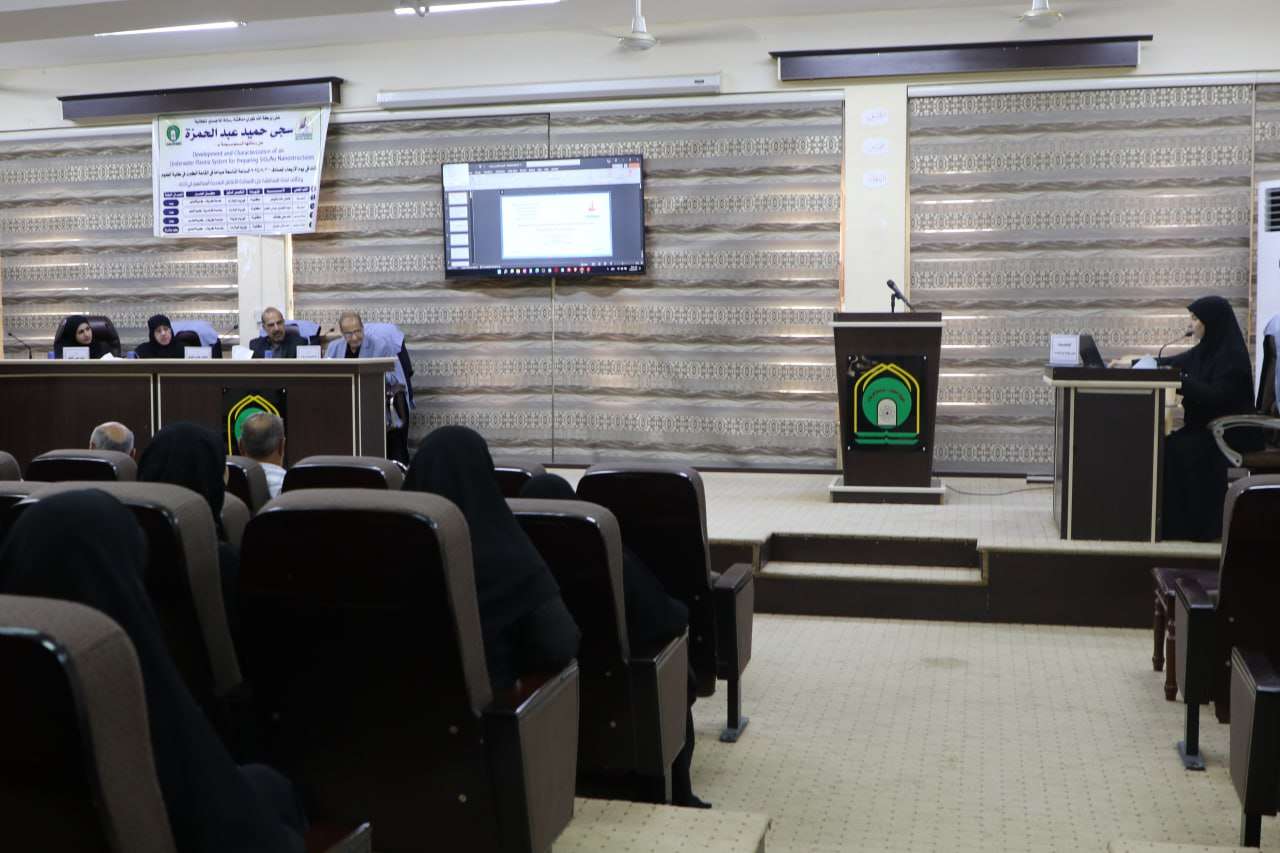
The College of Science at the University of Kerbala discussed a master’s thesis by Saja Hamid Abdul-Hamza from the Department of Physics, which focused on the development and characterization of an underwater plasma system for the synthesis of SiO₂/Au nanocomposites.
The study involved the design of an automated system for plasma generation and nanoparticle production based on the exploding wire technique, in addition to the characterization of the plasma and the resulting nanoparticles. Findings revealed that the applied current significantly affected plasma properties such as electron temperature and density, which in turn influenced the structural and optical characteristics of the nanocomposite. The results indicated that electron temperature, density, crystallinity, and optical absorption of the nanocomposite increased proportionally with the applied current.
The research also demonstrated that SiO₂/Au nanocomposites hold promising applications in biomedical fields, renewable energy (such as solar cells), as well as in enhancing Raman spectroscopy.
The thesis recommended the incorporation of silanization agents to improve the morphology of the external gold shell, thereby enhancing the plasmonic resonance and photocatalytic activity of the nanocomposite, which opens new horizons for both scientific and industrial applications.