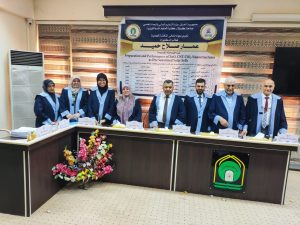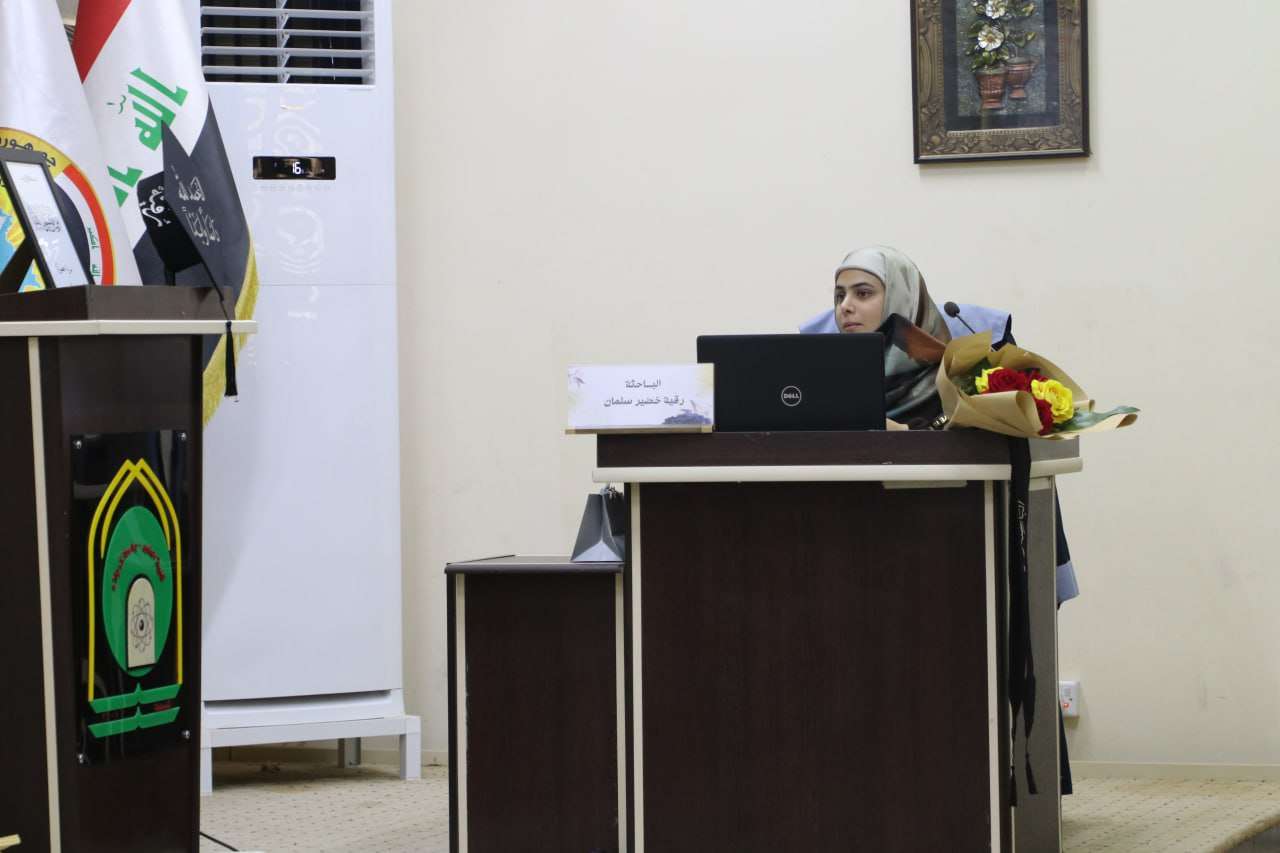
The College of Science at the University of Kerbala discussed a master’s thesis by Ruqayya Khudair Salman from the Department of Physics, which focused on the preparation and spectral analysis of silver and copper nanoparticles synthesized using pulsed laser ablation in liquid (PLAL).
The study aimed to optimize the preparation conditions of silver and copper nanoparticles through PLAL in distilled water, examining the effect of laser parameters—such as wavelength, energy, and number of pulses—on the spectral and structural properties of the colloidal solutions. It also assessed particle stability using zeta potential measurements and spectral analysis over time.
The results demonstrated that PLAL in distilled water is an effective and safe method for producing pure nanoparticles without chemical additives. The color intensity of the colloid was directly linked to particle concentration, while spectral analysis confirmed the stability of plasmonic peaks and size uniformity. Moreover, irradiation at 532 nm yielded superior morphological and structural stability compared to 1064 nm, highlighting the potential for creating hybrid properties through silver–copper interaction.
The thesis concluded that laser-based synthesis in water represents a promising approach for generating stable nanoparticles suitable for optical and biomedical applications.
Recommendations included long-term stability monitoring through spectral and dynamic measurements, advanced surface and structural analyses (XRD, FTIR, XPS), and evaluating the antibacterial activity and cytotoxicity of Ag–Cu nanoparticles prepared at different wavelengths to strengthen their potential for medical and environmental applications.