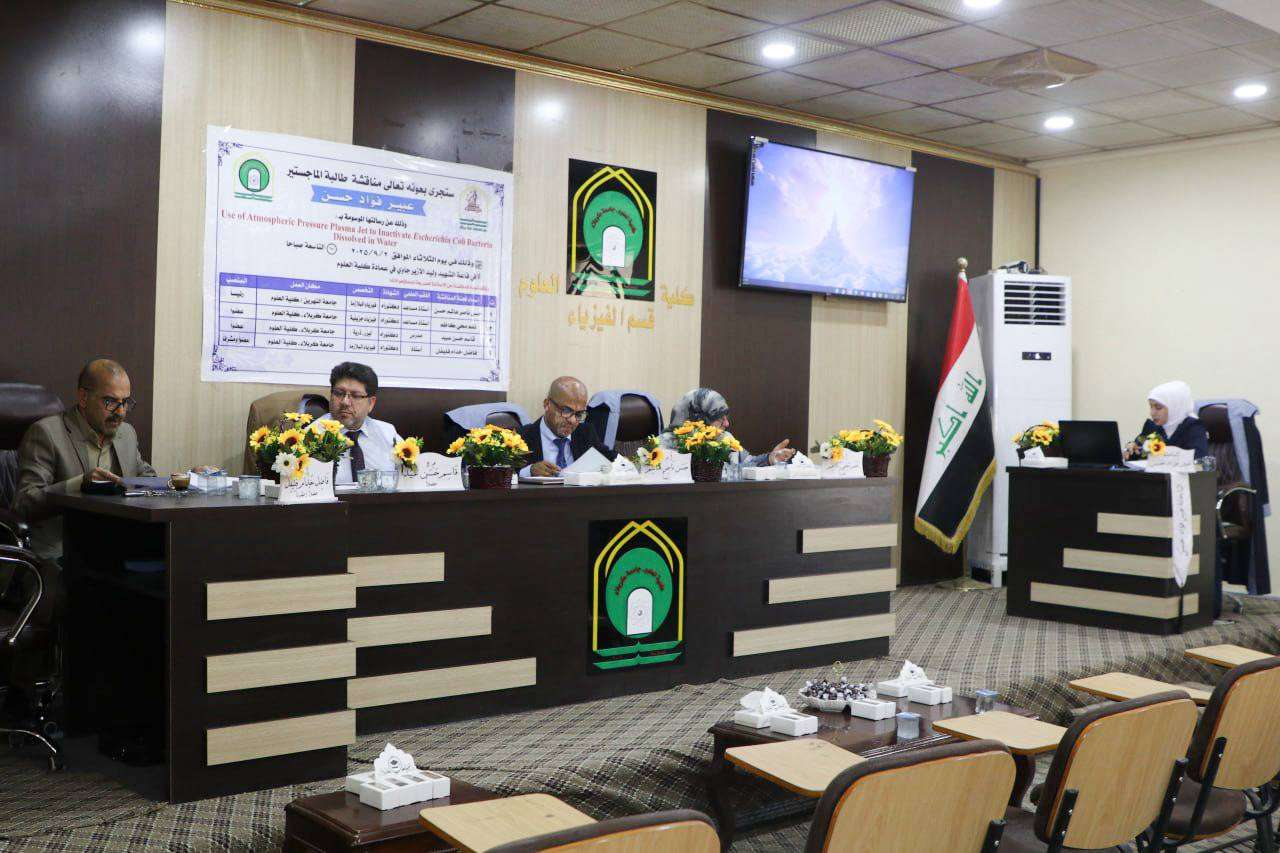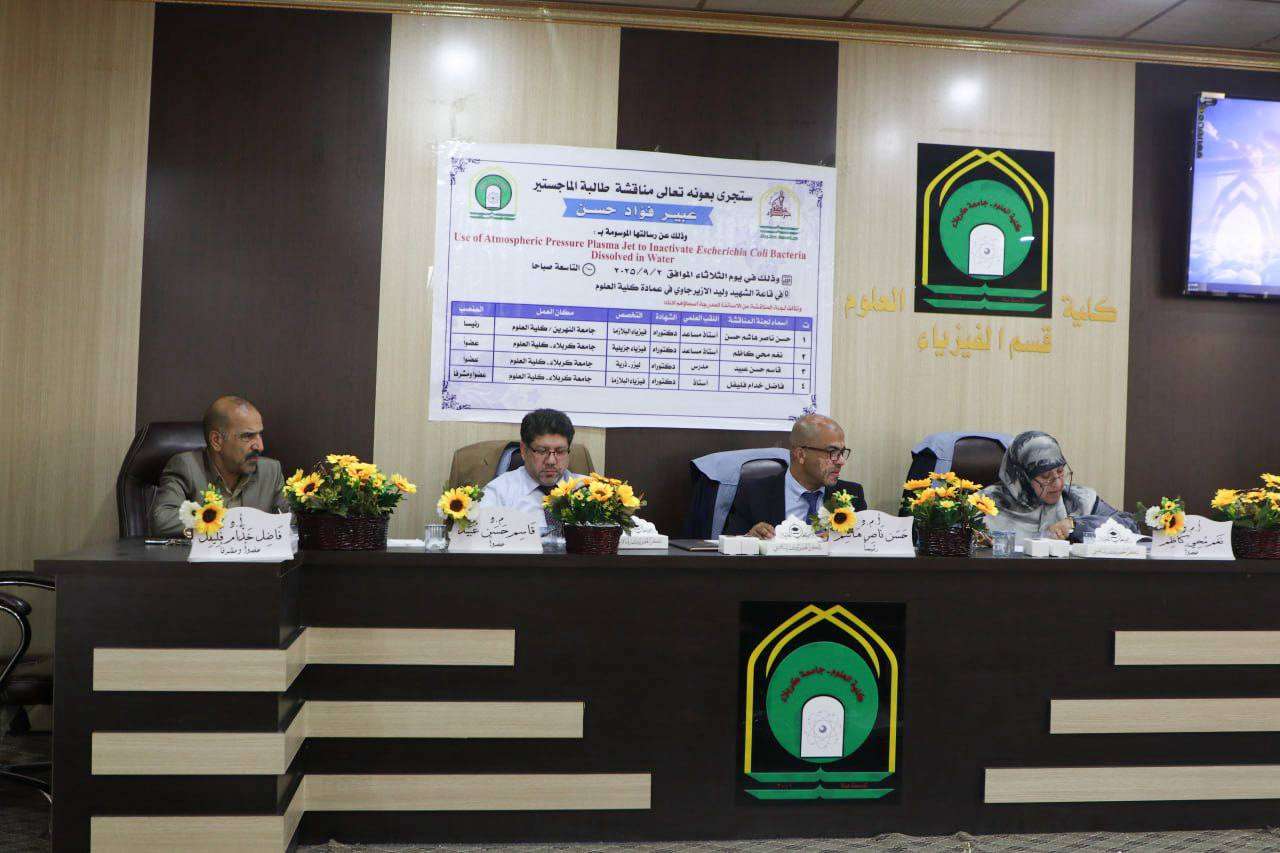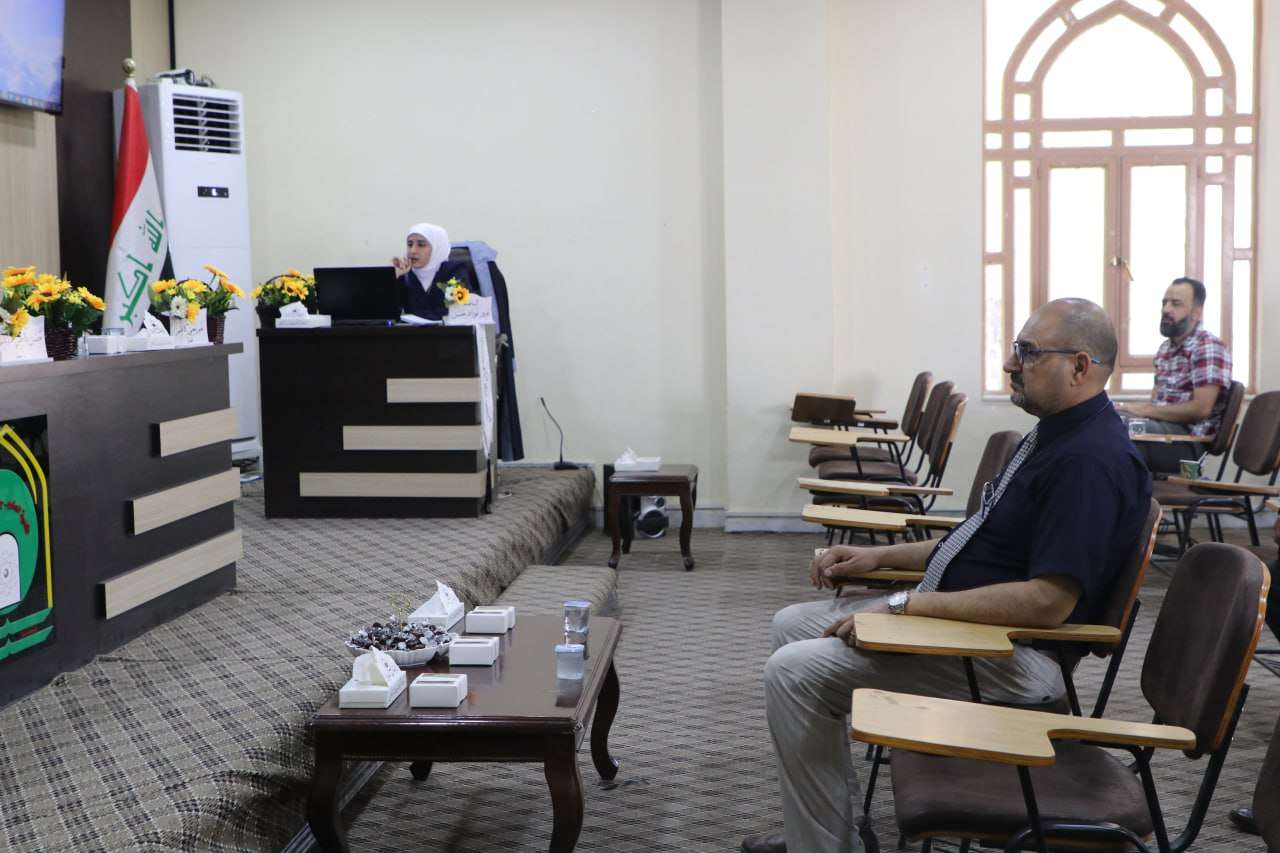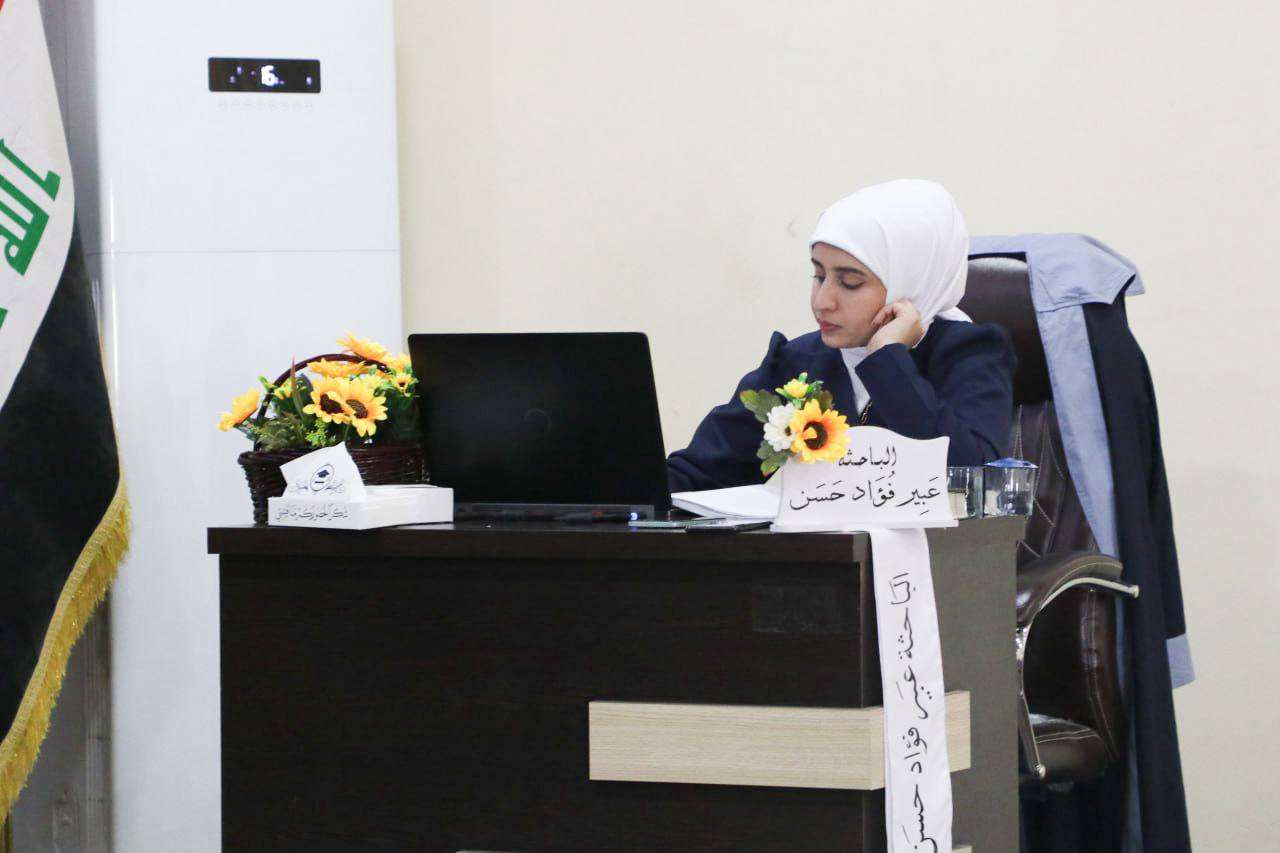
The faculty of Science at the University of Kerbala has examined a master’s thesis by student Abeer Fouad Hassan from the Department of Physics, which investigated the application of atmospheric pressure plasma jet (APPJ) to reduce the viability of Escherichia coli (E. coli) bacteria in water.
The research aimed to determine the optimal operating parameters of the APPJ device and to study the fundamental plasma characteristics—such as plasma column length, gas and electron temperature, electron density, and the intensity of reactive species—to clarify their role in the treatment process. It also sought to assess the effectiveness of the plasma jet in deactivating E. coli in contaminated water.
The results demonstrated that employing a helium plasma jet at 12 kHz frequency and 9 kV voltage led to a significant reduction in bacterial count after 25 minutes of treatment. The turbidity level decreased from 2.70 NTU to 0.9 NTU, confirming the efficiency of the system in sterilizing polluted water under non-thermal conditions.
The thesis concluded that the plasma jet system represents a promising technique for water treatment and the effective reduction of bacterial contaminants.
Recommendations included verifying the effectiveness of different gas mixtures to enhance reactive species generation, designing multi-tube arrays to expand industrial applications, and exploring the combined effect of plasma treatment with antibiotics to target resistant strains.